Services
Specific individual communications services or integrated, end-to-end editorial and production support. Quality improves and timelines shorten when one team manages the full production cycle.
Writing and Editing
Technical publications succeed or fail on the quality of the writing. We provide multiple levels of editorial intervention, from light copy-editing that polishes grammar and consistency through to heavy substantive editing that restructures arguments, tightens logic and transforms dense technical drafts into clear, readable prose. Every editor we assign has subject-matter familiarity in the relevant field – public health, climate, agriculture, humanitarian issues – because editorial quality depends on understanding what the text is actually saying.
For publications that need to reach non-specialist audiences, we offer plain-language revision: stripping jargon, shortening sentences and restructuring content so that policy-makers, journalists and the general public can engage with it.
We offer writing from scratch, based on source materials and background research or on interviews (remote or in the field) with key stakeholders. We can also rewrite rough drafts supplied by the client to improve the structure, flow of ideas and clarity, and ensure that the document is appropriate for its target audience.
All writing and editing follows the client's preferred style guide. Where no style guide exists, we apply a recognised standard and document every editorial decision for transparency and consistency.
We work on all types of material: flagship publications, annual reports, technical reports, systematic reviews, working papers, policy briefs, success stories, case studies, brochures, websites, blogs and social media posts, video scripts, infographics, journal articles, PowerPoint presentations, clinical guidelines, training manuals, toolkits, online learning materials, strategies, meeting reports, position papers. And for all types of target audience: academics, scientists, government officials, donors, policy-makers, smallholder farmers, healthcare workers, children, development workers, decision-makers, the general public.
- Substantive and developmental editing
- Copy-editing (light, medium, heavy)
- Plain-language revision
- Writing and rewriting
- Style guide development and application
- Reference checking and bibliography formatting
- Fact-checking and consistency review
- All communication forms and all types of target audience
Design and Layout
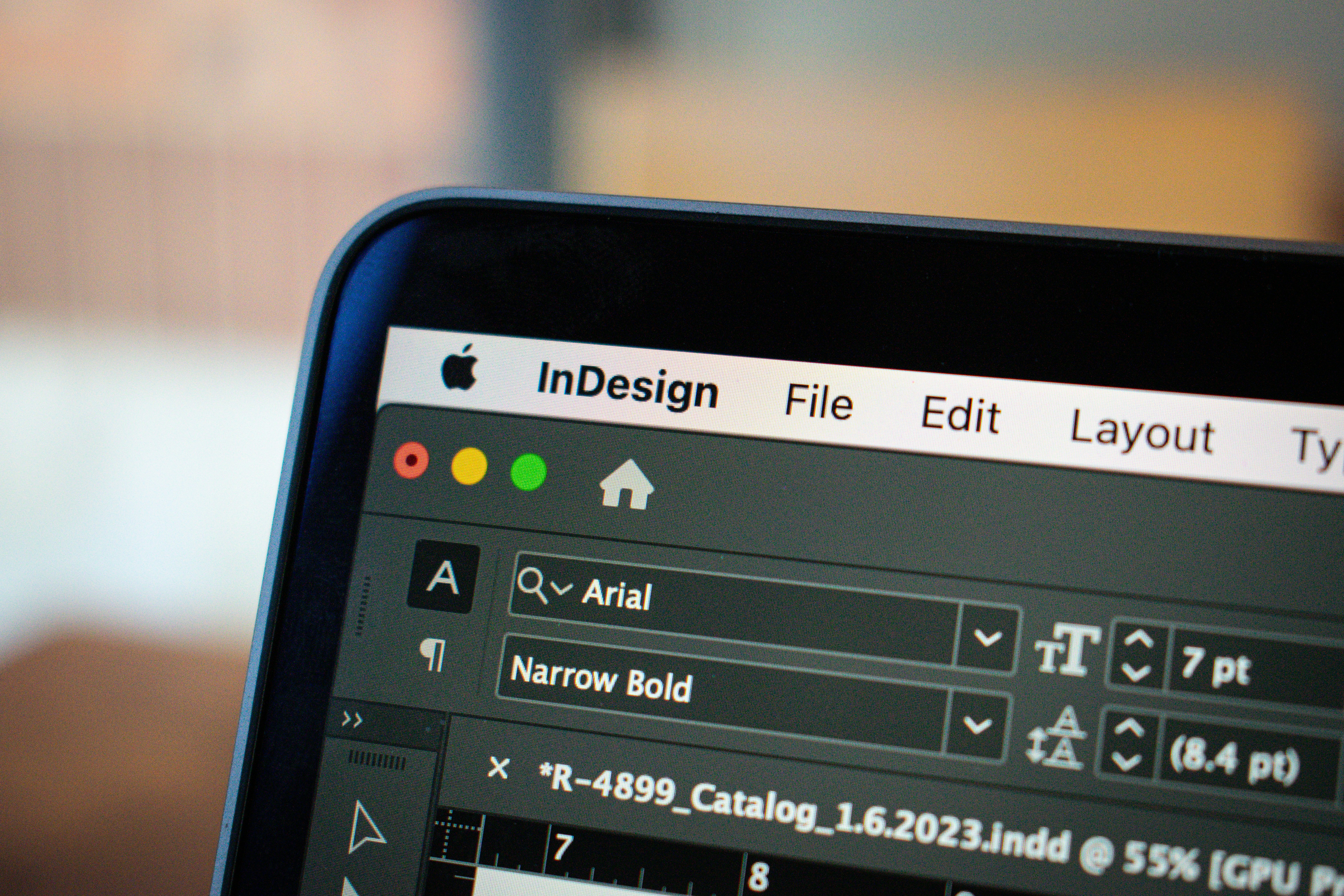
We design publications that communicate complex information with clarity. That means considered typography, structured layouts that guide the reader and graphics that earn their place on the page. Our designers work in InDesign for print and digital layout and produce output in every format our clients need: print-ready PDFs with bleed and crop marks, screen-optimised PDFs, accessible tagged PDFs and interactive digital formats.
We have extensive experience designing publications that meet WCAG 2.1 AA accessibility standards. When clients require accessible outputs, we build compliance into the design process from the first template – structuring documents with proper heading hierarchies, reading order, alt text and tagged content so that assistive technologies can navigate them reliably.
For organisations that publish regularly, we develop design templates and style systems that maintain brand consistency across dozens or hundreds of publications per year, while giving each document its own identity within the family.
- Publication design and typesetting
- Infographic design and data visualisation
- Cover design
- Bespoke illustration
- Brand and identity development
- Logo design
- Template and style system development
- Accessible PDF production (WCAG 2.1 AA)
- Print-ready and screen-optimised output
- Interactive and digital format production
- Website design
Proofreading
Proofreading is the last line of defence before publication. It catches any last errors that survived editing as well as layout issues: transposed figures, broken cross-references, inconsistent table formatting, caption mismatches and the small but consequential mistakes that undermine a publication's credibility. Our proofreaders review the final laid-out pages, checking not just text but every element that a reader will see.
For data-heavy publications, proofreading includes systematic verification of figures, tables and their in-text references. Numbers in the executive summary must match the analysis chapters. Table totals must add up. Headings and pagination of the table of contents must match the actual document. Figure labels must correspond to the correct graphic. These checks are time-consuming and critical, and we treat them with the rigour they demand.
Every proofread is conducted against the relevant style guide – whether the client's own house style, a UN editorial manual, or a standard like Chicago or Oxford. We mark and track every correction, providing a clear audit trail of changes made at the final stage.
- Final-stage text proofreading
- Figure, table and data verification
- Cross-reference and citation checking
- Style guide compliance review
- Consistency checks across chapters and components
- Tracked corrections with full audit trail

Data Visualisation
The publications we work on are often full of data: emissions trajectories, disease burden estimates, trade flows, progress indicators, budget allocations and impact metrics. Presenting this data clearly is not a graphic design problem – it is a communication problem. We work with authors and analysts to determine what the data needs to say, then design graphics that say it without distortion, clutter or ambiguity.
Our data visualisation work ranges from straightforward bar charts and line graphs to complex multi-variable displays, geographic visualisations, infographics, bespoke illustrations, maps and interactive dashboards. Every graphic is designed for its final output context – whether that is a printed page, a PDF viewed on screen, a PowerPoint slide, a web page or social media feed. Colour palettes are chosen for brand adherence, print fidelity, screen legibility and accessibility for those who are colour-blind or have a visual impairment.
All data visualisations are delivered publication-ready, with proper labelling, sourcing and notes integrated into the design. We also provide the underlying vector files so that clients can adapt graphics for derivative products, presentations and social media.
- Statistical and scientific chart design
- Geographic and spatial visualisations
- Progress dashboards and indicator displays
- Supply chain and process flow diagrams
- Interactive and web-ready data graphics
- Infographics
- Colour-blind and visual impairment accessible design
- Publication-ready vector output
Translation
We translate into all the official UN languages and more: French, Spanish, Arabic, Portuguese, Chinese, Russian, Bahasa Indonesia and German. Every translator is a native speaker in the target language and fully fluent in their source language(s) and is an experienced specialist in international development communications. Our translators have all worked with us for many years. They understand the jargon, the terminology, and the wider development context so they can fully localise the translation to ensure the intended meaning is conveyed effectively and elegantly.
Our translations are all carefully checked as a standard part of our service – to ensure not just accuracy of translation but adherence to style, consistency, readability, tone and appropriateness for the target audience. This negates the need for subsequent copy-editing – making the work more cost-effective overall – our translations are ready to go straight to layout or onward publication. Institutional publications carry weight – imprecise translation can alter the meaning of policy recommendations, technical guidance or legal obligations. Our review process is designed to catch exactly those problems before they reach publication.
- Subject-specialist translation in 8+ languages
- Native-language translators
- Terminology management and glossary development
- Translation memory maintenance for repeat clients
- Back-translation and verification for sensitive content
- Integrated translation-to-layout workflow
- Full localisation
Multilingual Production
Producing a publication in multiple languages is not as simple as translating text and dropping it into the English layout. Arabic reads right-to-left and requires mirrored page design. Chinese and Russian demand different typographic grids. French text typically runs 10–15% longer than English. Each language version needs a designer who understands its script conventions and can select appropriate fonts and a proofreader who reads it natively.
We run multilingual projects as integrated workflows, not parallel silos. A single project manager coordinates all language versions, ensuring that corrections made or errors spotted in one language are integrated across all others and that every version matches in terms of content but is localized as appropriate. This matters when a publication launches simultaneously in multiple languages – there is no room for one version to lag behind or diverge from the approved content.
Our production team handles layout in all the languages we translate, and has the specialist software for the full range of non-Latin scripts, including Arabic, Chinese and Russian.
- Right-to-left layout for Arabic
- Cyrillic, Chinese and other non-Latin script production
- Native-language quality control for every version
- Coordinated multi-language release management
- Script-specific typographic and design adaptation
Accessibility Compliance
Regulatory expectations around document accessibility are tightening rapidly. The European Accessibility Act, Section 508 in the United States and evolving requirements across international organisations all point in the same direction: published documents must be accessible to people using assistive technologies. For clients who require accessible outputs, we build compliance in from the start of the project, because retrofitting it after the fact is slower, more expensive and produces worse results.
Our standard is WCAG 2.1 AA. In practice, this means documents have a logical reading order, proper heading structure, tagged content, meaningful alt text for images and graphics, accessible tables and correctly specified document language. We test outputs with assistive technology, not just automated checkers, because automated tools miss structural problems that a screen reader will stumble on.
For clients transitioning from legacy workflows, we also provide accessibility audits of existing document libraries and remediation of priority publications to bring them up to standard.
- WCAG 2.1 AA compliance as standard
- Document tagging and structure
- Alt text authoring for complex graphics
- Reading order and navigation testing
- Assistive technology testing (screen readers, magnifiers)
- Accessibility audits of existing publications
- Remediation of legacy documents

Project Management
Complex publications can involve dozens of contributors, multiple review cycles, parallel language versions and hard deadlines tied to board meetings, conferences or policy windows. We provide end-to-end project management that coordinates every element – from manuscript development and author liaison through editing, design, translation, accessibility and final delivery of digital or print outputs – through a single point of contact.
Our project managers are experienced in the specific demands of institutional publishing. They understand review-by-committee workflows, manage version control across multiple stakeholders, and keep multi-component projects on track when scope shifts mid-cycle. For large flagship publications, we build detailed production schedules with built-in contingency and provide regular status reporting to the client team.
The value of integrated project management is most apparent on multi-language, multi-format projects where the dependencies between workstreams are dense. One team managing the entire workflow eliminates the coordination overhead, version conflicts and communication gaps that plague projects split across multiple vendors.
- End-to-end production coordination
- Multi-component and multi-language project management
- Single point of contact for clients
- Production scheduling with milestone tracking
- Author and stakeholder liaison
- Version control and review cycle management
- Risk management and contingency planning